Part 2 – Thuraya XT-LITE and backup SIM: Benefits, Costs, and Special Features
Part 1 of this series explained how satellite phones work and how the networks differ. For Europe, Africa, and the Middle East, Thuraya is often the obvious choice because its network covers these regions. Using the Thuraya XT-LITE and the Thuraya Prepaid Backup SIM as examples, this part shows how to set up an emergency preparedness plan – especially for private individuals – at a reasonable cost and what to keep in mind when doing so.
The device: Thuraya XT-LITE
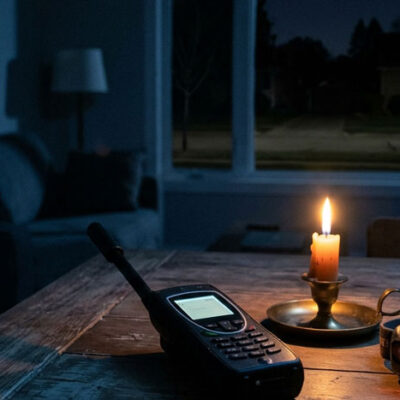
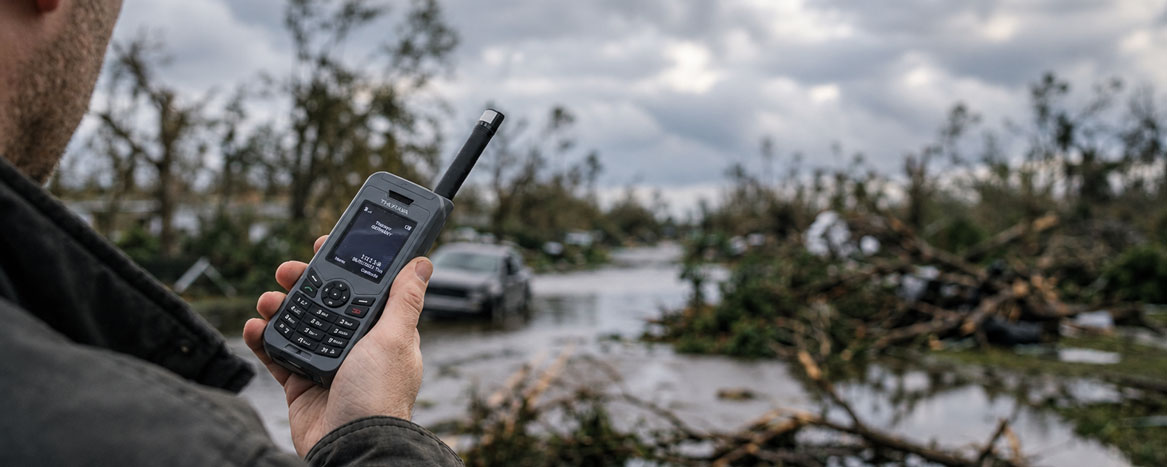
The Thuraya XT-LITE is a simple, robust handset that is limited to making calls and sending text messages. It is no substitute for a smartphone, and that is precisely its advantage for emergency preparedness: minimal technology, simple operation and a long standby time. The current model (XT-LITE V2) has a micro-USB port for charging – a 220V charging cable, adaptors for various countries and a user manual are included.
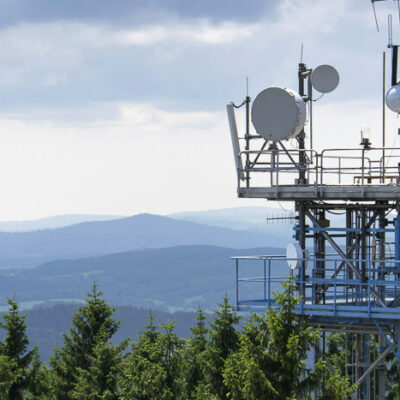
As with all geostationary networks, the phone needs a clear line of sight to the satellite. In Central Europe, the new Thuraya 4 satellite is low in the south-eastern sky. The dishpointer service allows you to check the direction and altitude of the satellite for any location. This enables you to check whether buildings or trees are blocking the view. We have explained this in more detail here: Thuraya – Satellite Network. If you want to be absolutely sure, you can test a device beforehand: Rental Devices cost €5 per day with a minimum hire period of 7 days, so at least €35 (+postage).
Why the backup SIM is the cheapest option
Thuraya offers several ways to use the phone:
- Prepaid SIM (e.g. NOVA Plus): a standard prepaid card with lower call rates, designed for regular use.
- Prepaid backup SIM: specifically for handsets that spend most of their time in a cupboard. No monthly subscription fee, initial validity of 5 years (renewal possible). Calls are more expensive than with NOVA Plus, but the cost of keeping the handset on standby remains low.
- Postpaid SIM (contract): with monthly subscription charges. For a device that is only needed in an emergency, ongoing charges do not usually make financial sense. For public authorities and businesses, however, we still recommend a contract, as this is the only way to ensure that the phone functions without restriction and, for example, does not run out of credit.
The maths is simple: if you rarely use the phone, you pay no ongoing charges with the backup SIM, just the renewal fee every five years. If, on the other hand, you use it occasionally or regularly, a standard pay-as-you-go card works out cheaper, as call charges are significantly lower.
Activation and validity: What expires, and when
Three things should be considered separately:
- SIM validity: The backup SIM is valid for five years from activation. Activation is carried out by us and is completed with the first call. The validity period begins with this call. The first call must be made within 12 months; otherwise, the card becomes invalid. We recommend activating the card and making the first call immediately upon receipt, rather than waiting until an emergency arises.
- Renewal: After five years, the renewal fee of 120 units will be deducted from your credit balance. If there is insufficient credit, the SIM will continue to operate for up to 365 days in accordance with Thuraya’s current guidelines (during which time you can receive calls); after that, it will expire. You should not rely on this grace period, as Thuraya may change the terms and conditions at any time.
- Voucher codes: available in denominations from 20 to 2,500 units. Unredeemed codes expire after approximately three years. There is no reason not to top up with purchased codes immediately; topped-up credit does not expire. You can find the current prices for credit codes here: Thuraya SIM cards and credit
Credit Balance: How much is advisable, and what happens when your credit runs out
The prices for the backup SIM are currently (November 2026):
- Calls to Thuraya, landlines or mobile phones within Europe (Zone 1):
2.50 units per minute - SMS: 0.49 units
- 160 units cost 215.00 euros (including 19% VAT)
Example: 160 units equate to around 64 minutes of calls or just over 300 text messages. A regular quarterly test comprising one minute’s call and one text message costs 2.99 units. That amounts to around 12 units per year and around 60 units over five years. This leaves around 100 units, or roughly 40 minutes, for emergencies. Credit must be topped up in good time before the five years expire to cover the 120 units’ renewal costs.
A note on text messages: The text messages referred to in the text always mean short messages sent from one Thuraya phone to another. This works reliably under normal conditions.
Although Thuraya promises that SMS messages also work to ‘normal’ mobile phones, in our experience this is rather unreliable. Technically speaking, every network used between Thuraya’s gateway and the recipient of the SMS must allow the message through. This may work, but it may not; please do not rely on it.
When your credit balance reaches 0 units, you will no longer be able to make outgoing calls. There is no automatic top-up when a certain threshold is reached. The ‘Call Me Back’ service is useful: even without credit, you can send an SMS to the short code 1755 to request a call back. This service is only available for Thuraya phones.
You can purchase Thuraya Voucher from our shop. You will then receive a 14-digit code by email. The credit can be topped up via an online account with Thuraya or directly using the phone’s keypad. This means that in an emergency, you must be able to reach us and our systems must be operational; this cannot be guaranteed. The practical implication: top up with sufficient credit in advance, rather than hoping to top up in an emergency.
Battery and accessories
For devices that are left unused for long periods, the battery is the most common weak point. Lithium-ion batteries age even when not in use and discharge on their own. As a rule of thumb: do not store them permanently at either full or empty capacity; check the charge level every few months and switch the device on. It is also advisable to have:
- a spare battery for the XT-LITE, which must then also be charged and checked
- a USB power bank, so that the phone can be charged even without mains power
- an external battery charger, which allows batteries to be maintained even without the phone
Test regularly
A satellite phone sitting in a cupboard is only as reliable as its last test. A simple routine:
- monthly: switch it on, check the battery level, test reception outdoors,
make a free test call to 1 11 12 ( Thuraya test service ) - quarterly: make a real call and send a text message between two Thuraya devices
- annually: check your credit balance and validity in your online account or check by dialing 151; check the batteries and replace them if necessary
This way, you’ll also get to know your emergency phone as you go along. It’s also a good idea to keep an emergency card with the device, listing the numbers of the contacts you need to reach, a location with a clear line of sight, and instructions on how to recharge it. The emergency card should also include the landline numbers of the nearest emergency control centres; special numbers such as 110 or 112 do not work with satellite phones.
What Thuraya cannot guarantee
The Thuraya network also experiences maintenance windows and disruptions. Over the past two years, there have been frequent instances of scheduled maintenance and unscheduled disruptions, some of which were linked to the launch of the new Thuraya 4 satellite. We publish details of current maintenance windows and disruptions on our website Network Alerts, as and when we become aware of them. Even a satellite network cannot guarantee 100 per cent availability.
How much does it cost?
A real-life example: three Thuraya XT-LITE handsets for a family, one backup SIM for each (valid for 5 years), and three sets of 160 units including delivery to Bavaria, cost €2,847.00, or around €949 per set.
After five years, the total cost for renewing three SIM cards (120 units each) amounts to €483.75. Anyone who tops up a total of 160 units per phone, thereby having a further 40 units available for calls and text messages, pays €645.00. All prices are as of November 2026. Current prices for the Thuraya XT-LITE and vouchers can be found on our shop page: Thuraya satellite phones, Thuraya SIM cards and airtime voucher.


Conclusion
In an emergency, a satellite phone can be the last functioning line of communication. The Thuraya XT-LITE with a backup SIM is one of the most cost-effective options for this: no ongoing charges, a five-year validity period and a simple device. Preparation is the key: a clear line of sight, pre-loaded credit, a well-maintained battery and regular tests.